" height="27.563451568878715px" id="F4dqiXzej" transform="translate(0 0.919)" width="180.08121297368123px"/></svg>)
What the Machine Cannot Hold

On intimacy, privacy and the parts of us that should never become data.
There is a moment in intimacy when the world becomes smaller.
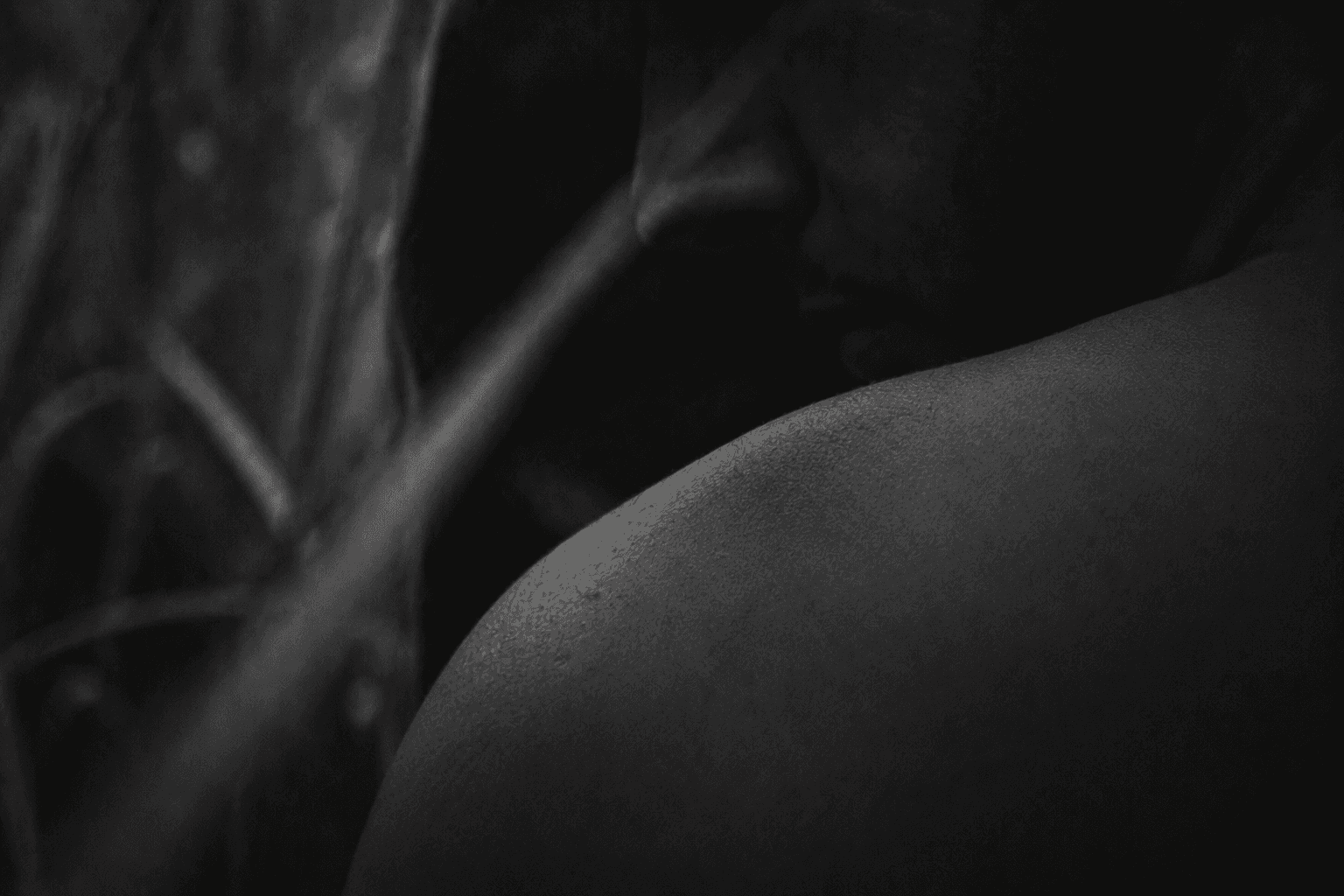
Two bodies turn away from everything around them. One person rests against the other. Their faces disappear. Nothing is performed for the camera. Nothing asks to be interpreted.
For a moment, there is only shelter.
We live in a time that asks us to make everything visible.
Our faces are recognised. Our movements are recorded. Our desires are predicted before we have found the words for them ourselves. Every pause becomes information. Every preference becomes a pattern. Every feeling is translated into something that can be measured, replicated and sold back to us.
Even creativity is beginning to look this way.
The same words. The same images. The same perfectly arranged lives. Everything increasingly polished, efficient and strangely familiar. We are surrounded by things that resemble human expression while slowly losing the accidents, contradictions and imperfections that made expression human in the first place.
In the TED conversation What makes us human in the age of AI?, social psychologist Brian Lowery and technologist Kylan Gibbs consider how artificial intelligence may change not only the way we work, but the way we relate to the world and to one another. The more convincing technology becomes, the more urgently we may need to understand what real connection feels like.
Perhaps this is why the image feels so important to me.
The people inside it are not asking to be understood. We cannot see their expressions or know what happened before they entered the frame. We do not know whether they are comforting one another, hiding, recovering or simply standing still.
The photograph protects its own mystery.
We need places where we are not content
Privacy is often described as secrecy, but I think it can also be a form of care.
To protect something is to say that it matters enough not to be endlessly exposed. It is to leave part of a person untouched by explanation, judgement or consumption. It is the freedom to exist without immediately turning that existence into evidence.
Philosophers have long connected privacy with intimacy, dignity and the freedom to form meaningful relationships. Privacy gives us control over how we reveal ourselves and to whom. Without it, love, trust and friendship lose the protected space in which they are allowed to deepen.
We need places where we are not content.
Places where a body is allowed to be a body. Where a feeling does not need to become a statement. Where two people can belong to one another for a moment without performing that belonging for anyone else.
In Held Within, I explored what the body carries when language falls short. This photograph feels like a continuation of that question. The closeness between these two figures says something that words would probably make smaller.
One body becomes a wall against the world.
The other finally allows itself to rest.
The emotions that refuse to become templates
Artificial intelligence can recreate the appearance of almost anything.
It can produce the language of desire. It can simulate tenderness. It can construct the image of two people in love.
But it cannot risk being changed by love.
It cannot feel the fear of showing someone the part of yourself you have spent years hiding. It cannot know the relief of being seen there and discovering that the other person has not walked away.
It cannot feel anger rising through the body before we understand why. It cannot experience happiness arriving unexpectedly and making an ordinary room feel different. It cannot lose someone and feel their absence rearrange the architecture of a life.
These emotions are inconvenient. They make us irrational and occasionally unbearable. They interrupt our plans. They leave traces on our faces and force us to become people we did not intend to be.
That is exactly why they matter.
Being human is not a style that can be replicated. It is not softness, warmth or imperfection added to an otherwise mechanical surface. It is the frightening reality that everything we love can change us and everything we lose can leave us changed.
We do not simply produce emotion.
We survive it.
Finding the self beneath the performance
Connecting with our humanity begins with finding the person underneath everything we have learned to perform.
Not the professional biography. Not the edited photograph. Not the personality shaped to become acceptable to an audience, a company, a family or an algorithm.
The quieter person beneath all of that.
Finding them can be painful. Sometimes it means admitting that a life we worked hard to create no longer feels like ours. Sometimes it means grieving the years spent becoming understandable to people who were never trying to understand us.
Sometimes it begins after rejection, when the identity we constructed suddenly stops protecting us. I wrote about that process in What Rejection Couldn’t Take - the slow return to the parts of ourselves that remain alive beneath expectation.
Loving yourself is not the clean, solitary triumph it is often made to resemble.
It is an excavation.
It is touching the parts of yourself that were abandoned because someone once called them excessive, difficult or strange. It is learning that being worthy of love does not require becoming easier to consume.
But allowing those parts to be seen carries risk.
The essay Intimacy is risky, but it’s the only way to true acceptance describes intimacy as exposure of the parts of ourselves that are both deeply important and vulnerable. To be known is to become vulnerable to judgement and rejection. It is also the only way we can be accepted in the fullness of who we are.
Perhaps love begins there.
Not when we finally become perfect enough to deserve it, but when we stop hiding everything that proves we are not.
Then, if we are lucky, we find someone who does not ask us to reduce ourselves again.
Someone who brings their own unfinished self and places it beside ours.
Love does not complete either person. It allows two people to remain whole while creating somewhere safe between them. A private space where neither has to disappear for the other to stay.
The philosopher and psychoanalyst Erich Fromm understood love as an art requiring knowledge, courage, discipline and practice. Love was not something that simply happened once the correct person appeared. It was an active capacity that had to be developed within the self.
I do not love you because I am incomplete.
I love you because I have finally found something within myself that I am no longer afraid to share.
And you love me by protecting it with me.
Coexistence requires boundaries
This is not an argument against technology.
AI will remain part of how we work, communicate and create. Refusing its existence will not protect us from it. The more urgent question is how we coexist without allowing its logic to become our own.
Even international frameworks for AI ethics now place human rights, dignity and human oversight at the centre of responsible technological development. The question is no longer simply what AI can do. We must also decide what it should be allowed to do and what must remain under human care.
Efficiency cannot become the measure of a meaningful life.
Prediction cannot replace curiosity.
Simulation cannot replace experience.
Visibility cannot become the price of existence.
We should decide that certain things deserve to remain inefficient.
A conversation that wanders.
A photograph that cannot be explained.
A relationship that has no audience.
A feeling that takes years to understand.
We should protect the right to make something without immediately asking how it will perform. We should protect the right to love someone privately.
Most of all, we should protect the right to remain unknowable in certain places, even to the systems that promise to understand us completely.
Not everything meaningful needs to resolve into an answer.
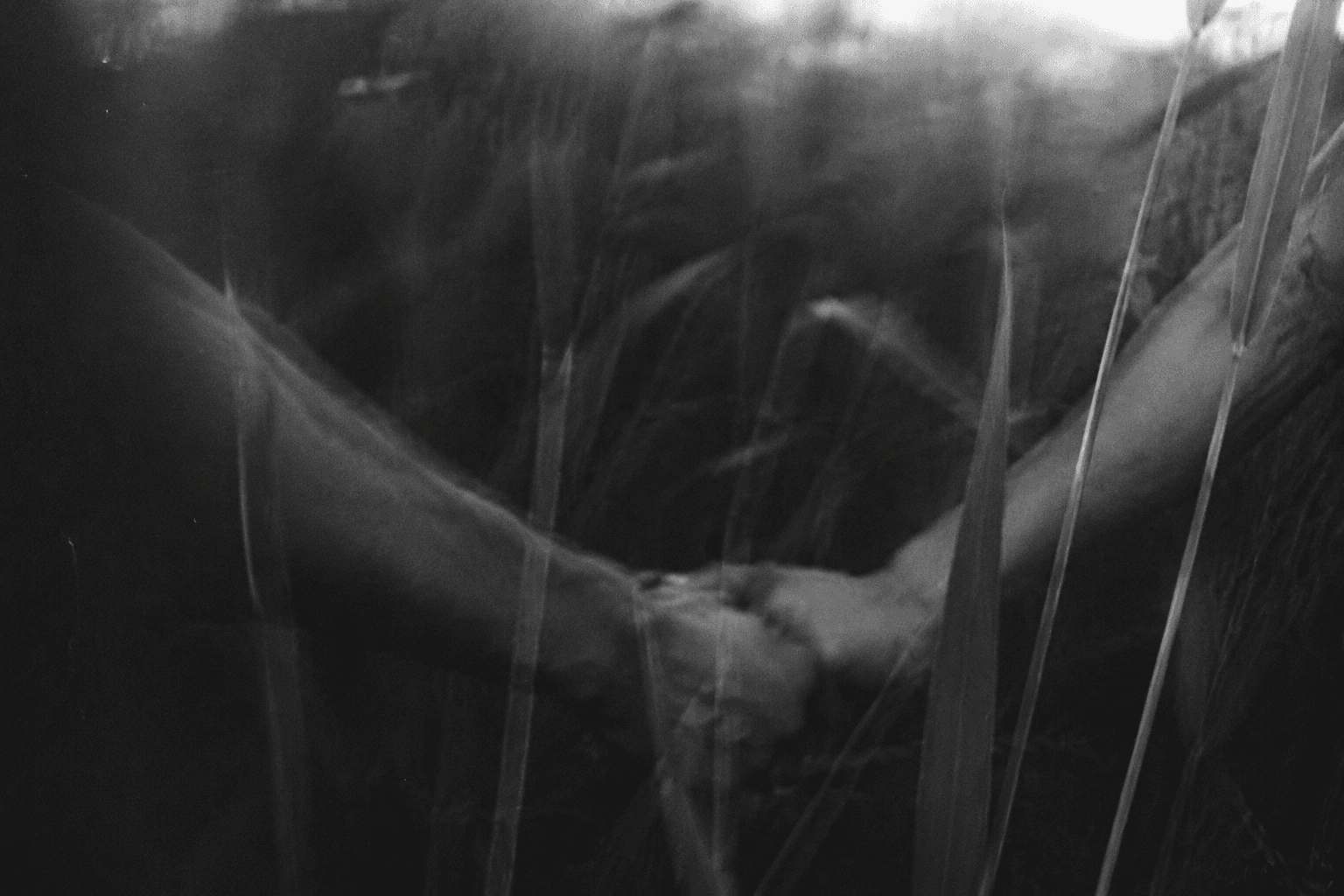
Perhaps that is what these two figures are protecting.
Not a secret, but a small and temporary world.
One in which nobody is being analysed. Nobody is producing anything. Nobody needs to explain why they need to be held.
One day, machines may learn to mirror us so beautifully that we momentarily forget the difference.
Then someone will reach for us in the dark, not because a pattern instructed them to, but because they heard something change in our breathing.
Their hand will find ours.
It will say:
I am here.
You are safe.
You do not have to explain.
Perhaps our task is not to prove that we are more intelligent than machines.
Perhaps it is to remain tender enough that intelligence is no longer the measure of a life.